





By using this site, you agree to the Privacy Policy and Terms of Use.
Accept
DU Squad
  • Feature Your College Society
  • News
    News
    DU News – Stay informed, stay connected with Delhi University! Check out the latest updates on DU events, programs and progress. With our dedicated team…
    Show More
    Top News
    DU SOL Non-teaching Staff Recruitment
    DU SOL Non-teaching Staff Recruitment Open for 77 Posts
    October 18, 2023
    LG approves the translocation of 252 trees at DU
    LG approves the translocation of 252 trees at Delhi University
    January 14, 2024
    CUET-UG 2024 Registration Date extended till 5th of April
    CUET-UG 2024 Registration Date extended till 5th of April
    April 4, 2024
    Latest News
    Delhi University to Discuss Proposal for DU Centre for Odia Studies in Upcoming EC Meeting
    December 13, 2025
    Delhi University to Launch DU Veer Savarkar College in June — Here’s an Overview of Its Offerings
    December 13, 2025
    DU Low-Demand Courses Likely to Be Scrapped or Recast as University Plans Major Academic Reforms
    December 9, 2025
    DU SOL Admit Card 2025: How to Download Your Semester Hall Ticket Online
    December 9, 2025
  • Colleges
    Colleges
    Discover the vibrant academic community at Delhi, a premier college affiliated with Delhi University (DU). Explore our range of undergraduate and postgraduate courses and join…
    Show More
    Top News
    How to get admission to Kalindi College?
    Kalindi College
    November 4, 2023
    Shaheed Bhagat Singh College, established in 1967 and located in the heart of Delhi University’s North Campus, is one of the premier institutions of Delhi University.
    Shaheed Bhagat Singh College
    March 2, 2023
    Bhim Rao Ambedkar College: Placements and Fee Structure
    Bhim Rao Ambedkar College (BRAC)
    September 10, 2023
    Latest News
    LSR Vs Miranda House, New Delhi: Syllabus Depth, Electives, Outcomes
    November 17, 2025
    SRCC Vs Hindu College: Seat Matrix, Placement Signals and Society Culture
    November 17, 2025
    Jamia Millia Islamia: Admissions, Courses, Fees, Entrance Exams, Cutoff, Ranking
    August 23, 2024
    Sri Venkateswara College
    March 3, 2023
  • Events & Fests
    Events & Fests
    Experience the rich culture, vibrant energy and exquisite traditions at Delhi University’s captivating and colorful fests and events. Unmissable highlights include star-studded performances, international events,…
    Show More
    Top News
    Tips for organising a college fest
    How To Organise A College Fest? A Complete Breakdown For You!
    September 16, 2023
    Latest News
    How To Organise A College Fest? A Complete Breakdown For You!
    September 16, 2023
  • Knowledge Corner
    Knowledge Corner
    Welcome to Knowledge Corner by DUSquad, where knowledge meets fun! We curate meaningful content that helps you stay up to date with what’s happening in…
    Show More
    Top News
    Delhi University has obtained the most CUET-UG application forms. The majority of the students seem to be from different states.
    Delhi University received the most CUET-UG applications with the maximum number of applications from UP
    April 12, 2023
    how to get SOL DU study material
    How To Get SOL DU Study Material?
    June 3, 2023
    How to Apply for Government Internships
    How to Apply for Government Internships?
    July 15, 2023
    Latest News
    LSR Swavalamban Resource Centre Sets a New Benchmark in Accessible Higher Education
    December 3, 2025
    Backlog and Improvement Exam Strategy at Delhi University: When to Take, How to Plan, and Cost–Benefit Approach
    November 29, 2025
    How to Get Admission in AIIMS After 12th: A Structured, Data-Driven Guide
    November 29, 2025
    How to Use Digital Resources at Delhi University: e-Library, Online Journals, and Free Student Tools
    November 22, 2025
  • College Societies
    College Societies
    DU College Societies are a great platform for students to explore diverse activities like music, debates, literary clubs, theatre etc. and showcase their talent. It…
    Show More
    Top News
    Gandhi Study Circle
    April 12, 2023
    Debating Society
    April 18, 2023
    UNMUKTI-Women’s Development Centre
    April 18, 2023
    Latest News
    Enactus – Motilal Nehru College
    January 29, 2024
    Connecting Dreams Foundation – DRC Chapter
    May 2, 2023
    ZEPHYR – The Film and Photography Society
    April 17, 2023
    VOCIFEROUS VOCATIONALS – The Vocational Society
    May 3, 2023
Reading: 10 Foundational Skills for Building a Successful Career in Artificial Intelligence
Share
Notification
Latest News
DU centre for Odia studies
Delhi University to Discuss Proposal for DU Centre for Odia Studies in Upcoming EC Meeting
News
DU Veer Savarkar College
Delhi University to Launch DU Veer Savarkar College in June — Here’s an Overview of Its Offerings
News
DU low-demand courses may be screpped
DU Low-Demand Courses Likely to Be Scrapped or Recast as University Plans Major Academic Reforms
News
DU SOL Admit Card 2025
DU SOL Admit Card 2025: How to Download Your Semester Hall Ticket Online
News
Delhi University Travel Grants for Faculty Members
Delhi University Approves Guidelines for DU Travel Grants for Faculty Members Amid Dissent
News
DU SquadDU Squad
Aa
Search
  • Home
  • News
  • Colleges
  • Events & Fests
  • College Societies
  • Knowledge Corner
  • Quick Links
    • Contact
    • Bookmarks
    • Privacy Policy
    • Terms and Conditions
Follow US
© DU Squad. By HRI Consultants. All Rights Reserved.
career skills for artificial intelligence
DU Squad > Knowledge Corner > 10 Foundational Skills for Building a Successful Career in Artificial Intelligence
Knowledge Corner

10 Foundational Skills for Building a Successful Career in Artificial Intelligence

Discover the top career skills for artificial intelligence to build a successful AI career and stay ahead in a fast-changing tech world.

admin
Last updated: 2025/11/09 at 2:42 PM
admin
Share
9 Min Read
career skills for artificial intelligence
SHARE

In the rapidly evolving landscape of artificial intelligence (AI), mastery requires more than basic familiarity with algorithms or tools; it demands a deliberate blend of deep technical expertise, contextual awareness, and human-centred adaptability. For students aspiring to enter this dynamic field, cultivating a comprehensive and strategic skill set offers not only a competitive advantage but also long-term professional resilience. Drawing on insights from leading academic and industry sources, the following ten career skills for artificial intelligence outline the essential competencies that students must develop to succeed in AI-driven careers.

Contents
Programming and Software Development Career Skills For Artificial IntelligenceMathematics and Statistics Career Skills For Artificial IntelligenceMachine Learning and Deep Learning MethodologiesData Handling, Wrangling, and Visualisation Career Skills For Artificial IntelligenceDomain Knowledge and Application Awareness Career Skills For Artificial IntelligenceCloud Computing, Deployment, and Big-Data InfrastructureNatural Language Processing (NLP) and Computer Vision (CV)Critical Thinking, Problem-Solving, and AdaptabilityEthical Awareness, Fairness, and Responsible AICommunication, Collaboration, and Learning AgilityConclusion

Programming and Software Development Career Skills For Artificial Intelligence

At the heart of AI lies programming, the craft that transforms abstract ideas into executable models. Proficiency in coding languages such as Python, TensorFlow, and PyTorch forms the foundation of AI work, while familiarity with C++ and Java enhances versatility across frameworks.

Beyond syntax, students must learn to design structured algorithms, employ version-control systems like Git, and engage in real-world projects that involve deploying AI solutions. Building small applications or replicating research papers helps students transition from theoretical learning to applied innovation.

Mathematics and Statistics Career Skills For Artificial Intelligence

Mathematics and Statistics Career Skills For Artificial Intelligence

Behind every AI model is a rigorous mathematical backbone. Linear algebra underpins neural networks, calculus drives optimisation, and probability and statistics guide inference and uncertainty estimation. A solid grasp of these areas enables students to understand how algorithms function rather than treating them as opaque systems.

Visual tools such as matrix diagrams or gradient maps can make abstract concepts intuitive, while mathematical exercises—proofs, derivations, and problem-solving analytical discipline. Students who combine intuitive reasoning with formal precision become far more capable of innovating responsibly within AI.

Machine Learning and Deep Learning Methodologies

Machine learning (ML) and deep learning (DL) sit at the centre of modern AI applications from recommendation systems to autonomous vehicles. Students should gain both conceptual understanding and practical competence in regression, clustering, decision trees, and neural networks.

Mastery involves not only implementing algorithms but also interpreting model behaviour, selecting hyperparameters, and evaluating performance metrics such as accuracy, recall, and F1 scores. Engaging with open datasets like MNIST or CIFAR and experimenting through frameworks such as TensorFlow or PyTorch allows students to internalise the iterative nature of AI model building.

Data Handling, Wrangling, and Visualisation Career Skills For Artificial Intelligence

AI thrives on data; therefore, the ability to collect, clean, preprocess, and visualise data is indispensable. Students must learn to handle noisy or incomplete datasets, understand database management through SQL, and manipulate structured or unstructured data using tools like pandas or NumPy.

Visualisation platforms such as Tableau or matplotlib help translate raw information into insights that inform decision-making. Building data pipelines, where students source data, refine it, and extract meaning, strengthens their understanding of how models depend on quality inputs.

Domain Knowledge and Application Awareness Career Skills For Artificial Intelligence

While technical proficiency is essential, contextual intelligence, understanding where and how AI is applied, determines its impact. Whether in healthcare, finance, robotics, or environmental modelling, domain-specific insight enhances the relevance and accuracy of AI solutions. For instance, applying machine learning in healthcare demands comprehension of medical ethics and patient data sensitivity.

Students should explore one or two domains deeply, read current research, analyse case studies, and design prototypes that solve real-world problems. Such contextual immersion bridges the gap between algorithmic power and societal utility.

Cloud Computing, Deployment, and Big-Data Infrastructure
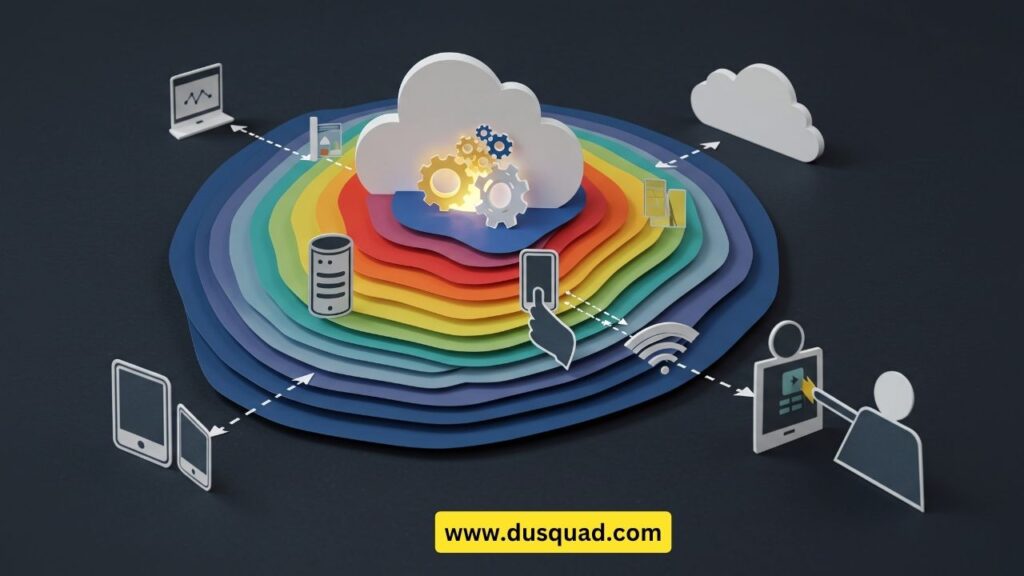
Cloud Computing, Deployment, and Big-Data Infrastructure

Modern AI systems rarely operate in isolation. They depend on scalable infrastructure and deployment frameworks. Cloud platforms such as Amazon Web Services (AWS), Microsoft Azure, and Google Cloud Platform (GCP) allow students to train, deploy, and monitor AI models efficiently.

Learning about containerisation technologies like Docker, orchestration tools like Kubernetes, and big-data systems like Hadoop or Spark prepares students for production-level implementation. Understanding how to operationalise models transforms theoretical expertise into enterprise-ready capability, an essential step for anyone aspiring to build deployable AI solutions.

Natural Language Processing (NLP) and Computer Vision (CV)

Among AI’s most dynamic subfields are NLP and CV—technologies that enable machines to understand language and interpret images. Mastery of NLP involves tokenisation, sentiment analysis, text classification, and language translation. Computer vision, on the other hand, encompasses image recognition, object detection, and scene segmentation.

Students can begin with publicly available datasets such as IMDB reviews or ImageNet, apply pre-trained models, and progressively experiment with fine-tuning architectures. These subfields not only sharpen technical expertise but also expose students to the interdisciplinary frontiers where AI meets linguistics, cognition, and perception.

Critical Thinking, Problem-Solving, and Adaptability

Beyond coding and computation, the ability to frame problems correctly, question assumptions, and interpret model outcomes critically is what distinguishes strong AI professionals. In a domain defined by constant change, adaptability becomes a strategic necessity.

Students should engage in hackathons, design challenges, and interdisciplinary collaborations where they must navigate ambiguous tasks. Such experiences train them to define appropriate metrics of success, recognise when models fail, and iterate efficiently. Critical thinking also helps students resist the temptation of technological determinism by emphasising human judgment alongside machine efficiency.

Ethical Awareness, Fairness, and Responsible AI

AI systems increasingly shape social and economic realities, raising pressing ethical questions about bias, privacy, accountability, and transparency. Responsible AI practices require understanding how datasets reflect human inequalities and how algorithms can perpetuate them.

Students must learn to audit datasets, identify potential biases in model predictions, and implement fairness-aware techniques. Exposure to ethical frameworks and policy debates deepens their appreciation of AI’s societal impact. Embedding ethics into technical training ensures that future AI practitioners design systems that serve humanity rather than merely efficiency or profit.

Communication, Collaboration, and Learning Agility

The final AI career skill that anchors all others is the ability to communicate and collaborate effectively. AI projects are inherently multidisciplinary, involving data scientists, engineers, domain experts, and policymakers. Students must therefore learn to translate complex findings into accessible narratives for varied audiences—technical or otherwise.

Presenting results clearly, writing concise reports, and engaging in teamwork foster professional maturity. Equally important is learning agility: the capacity to continuously update one’s skills through online courses, peer learning, and research engagement. In a discipline that evolves as rapidly as AI, curiosity and humility are as valuable as technical mastery.

Conclusion

For students pursuing careers in AI, the deliberate cultivation of these ten interconnected career skills for artificial intelligence forms a balanced and future-ready foundation. Technical expertise, rooted in programming, mathematics, and machine learning, must harmonise with infrastructural literacy in data handling and cloud deployment while being anchored in ethical responsibility and communication competence.

In an environment marked by rapid innovation and increasing automation, success depends not simply on mastering tools but on applying them thoughtfully, interpreting results critically, and engaging with broader human contexts. The future of AI will be shaped not just by those who can code models, but by those who can question, adapt, and lead with integrity.


VIA: Shanvi Triyar
admin November 9, 2025
Share this Article
Facebook Twitter Whatsapp Whatsapp LinkedIn Telegram Copy Link
Leave a comment Leave a comment

Leave a Reply Cancel reply

Your email address will not be published. Required fields are marked *

Follow US

Connect with us on Social Media
Facebook Like
Twitter Follow
Instagram Follow
Youtube Subscribe

Feature Your College Society

- Advertisement -
Ad imageAd image
newsletter featurednewsletter featured

Subscribe Newsletter

Subscribe to our newsletter to get our newest articles instantly!

Knowledge Corner

DU ethnic day celebration
“Desi Boyz and Girlz”: Rules for the DU Ethnic Day Celebration
October 14, 2023
How should you describe yourself in an internship interview
How to Describe Yourself Well in an Internship Interview?
June 24, 2023
DU SOL Postgraduation admission 2023-24
DU SOL Postgraduation Admission 2023-24: Registration Begins
July 2, 2023
This article explores the reputation of Delhi University's degree. Let’s examine the factors contributing to the institution's credibility.
How Valuable is Delhi University’s Degree?
April 24, 2023

You Might Also Like

LSR Swavalamban Resource Centre
Knowledge Corner

LSR Swavalamban Resource Centre Sets a New Benchmark in Accessible Higher Education

December 3, 2025
Delhi University Backlog and Improvement Exams
Knowledge Corner

Backlog and Improvement Exam Strategy at Delhi University: When to Take, How to Plan, and Cost–Benefit Approach

November 29, 2025
AIIMS admission after 12th
Knowledge Corner

How to Get Admission in AIIMS After 12th: A Structured, Data-Driven Guide

November 29, 2025
Delhi University e resources
Knowledge Corner

How to Use Digital Resources at Delhi University: e-Library, Online Journals, and Free Student Tools

November 22, 2025
DU Squad

Quick Links

  • About Us
  • Become a DU Star
  • Become a Contributor
  • List Your College Events
  • Feature Your College Society​

Explore By

  • Student’s Life @ DU
  • Affordable Hostels @ DU
  • Good Food @ DU
  • Hangout Spots @ DU
  • Academics @ DU

DU Happenings

  • DU Admission Updates
  • Events & Fests
  • DU News
  • DU Elections
  • Internship Fairs

Student's Resources

  • DU Colleges
  • College Societies
  • Courses
  • Knowledge Corner
  • DU School of Open Learning

hello@dusquad.com

Twitter Follow
Instagram Follow
Youtube Subscribe
Telegram Follow

Copyright © 2023 DU Squad. All Rights Reserved by HRI Consultants.

  • Privacy Policy
  • Terms and Conditions
BE THE STAR OF YOUR CAMPUS, HERE’S HOW

Removed from reading list

Undo
Welcome Back!

Sign in to your account

Lost your password?